So kidding season has begun and our first kids were born yesterday. I have been gone during the day for the last two days, attending cheese class at UVM/VIAC, so I missed Katie's kiddings but of course my mom and Meghan (our new intern) had things well under control. I admit it was very nice to be able to get up early and head off to class in Burlington instead of having to get up even earlier and go do morning feedings before I could even think about getting ready for class. Meghan just started last week but she has jumped right in and is doing a spectacular job of assuming a key role in the general day to day function of the farm.
Off I went to class this morning, knowing full well that after 8+ hours in the classroom I was going to have to make the hour drive back home at the end of the day and head straight to the cheese room to pasturize milk and set my weekly batch of chevre. When I got back home around 7 the only doe left to kid was Nimbus so Meghan joined me in the cheese room and we checked in on Nimbus periodically so my mom would get a break from goat monitoring. At about 10:30pm we headed out, chevre setting for the night, and I was just starting to think about warming up the dinner I'd brought home earlier - only to find Nimbus in labor.
Unfortunately it was not an easy one for Nimbus and after quite a bit of extra effort by all hands on deck she did give birth to 3 live kids - all bucklings. So, a full day of cheese class, cheesemaking, goat kidding, and 1 vet visit later, it's almost 1:45 am and my head is finally about the hit my pillow for a few hours of sleep before I have to get up and milk.
Yup! Kidding season has definitely begun :)

Showing posts with label cheese. Show all posts
Showing posts with label cheese. Show all posts
Wednesday, February 22, 2012

Saturday, February 18, 2012
Nope, no kids yet!
While we expect kids any day now there aren't any yet! All three moms-to-be have been moved inside the barn into the kidding area for the night, and there is definitely some serious nesting behavior going on, but nope - no kids yet.
Kids won't be coming soon enough from a cheese perspective. The does we milked through this winter and dwindling and milk production is pretty darn low. The last of our feta cheese was made up into packages of marinated feta and most of them sold at market today in Montpelier, as did most of our newer aged raw milk cheese, Tweed River.
Tweed River Tomme started out as an experiment in cheesemaking to produce an "old school" hand made cheese from our farms milk in a French tradition that would be unique to our farm and we couldn't be more pleased with the result - other than the fact that we are almost out of stock!
Kids won't be coming soon enough from a cheese perspective. The does we milked through this winter and dwindling and milk production is pretty darn low. The last of our feta cheese was made up into packages of marinated feta and most of them sold at market today in Montpelier, as did most of our newer aged raw milk cheese, Tweed River.
Tweed River Tomme started out as an experiment in cheesemaking to produce an "old school" hand made cheese from our farms milk in a French tradition that would be unique to our farm and we couldn't be more pleased with the result - other than the fact that we are almost out of stock!
Wednesday, January 25, 2012
Artisan or Farmstead??
As January whizzes by, kidding season is fast approaching. While I am primarily a cheesemaker, being a "farmstead" cheesemaker adds a lot more to the definition than just cheese. Being "farmstead" implies that we make our cheese with milk from our own animals raised and milked on the farm where the animals are raised. Our cheese is also "artisan" cheese - produced in small batches, with attention to the tradition of the cheesemaker's art, and using as little mechanization as possible. Cheese made by hand.
With the farmstead chapter comes milking and goat care. In order to get milk - you need them to get pregnant and have kids. Seems simple enough. Well maybe simple isn't the right word. Life during kidding season is definitely not simple. My mom handles most of the kidding watch, but at least one night a week I take that duty. Sometimes it's quiet, othertimes just sleepless, and then here are the busy nights. We are always glad when kidding season is over, but somehow as it rolls around again we still get excited to see the new kids arrive and ramp up the milk production once again.
With the farmstead chapter comes milking and goat care. In order to get milk - you need them to get pregnant and have kids. Seems simple enough. Well maybe simple isn't the right word. Life during kidding season is definitely not simple. My mom handles most of the kidding watch, but at least one night a week I take that duty. Sometimes it's quiet, othertimes just sleepless, and then here are the busy nights. We are always glad when kidding season is over, but somehow as it rolls around again we still get excited to see the new kids arrive and ramp up the milk production once again.
Tuesday, January 17, 2012
New Cheese on the Block
I've been working on another new cheese. So far it's just been on paper, lot's of reading and researching, and of course tasting. I actually started this idea when trying to tweak a cheese we already make and liked the results; not for that cheese but certaily for a future project.
As I've written before I have a bit of an obsession with Spanish cheeses. We already have a Garrotxa style cheese that we introduced last year to great reviews from tasters. This next cheese is indeed inspired by a Spanish cheese and will be a raw milk aged goat milk cheese, with a special aging process. I made the first trial cheese today so we'll see. So far so good!
As I've written before I have a bit of an obsession with Spanish cheeses. We already have a Garrotxa style cheese that we introduced last year to great reviews from tasters. This next cheese is indeed inspired by a Spanish cheese and will be a raw milk aged goat milk cheese, with a special aging process. I made the first trial cheese today so we'll see. So far so good!
Monday, January 16, 2012
My Bad
Wow. Things get busy and before I know it a couple weeks have passed since I posted. Not exactly a consistent start to blogging.
Winter has finally settled in, well kind of. We weren't sure if it ever would for a while, there still isn't much snow which leaves us wondering. A better illustration is to look at the numbers for our region. Last year, October 1 to mid January, we received 37.7" of snow. This year we've only had 15.1" inches of snow - and you wouldn't know it looking at the ground cover. We have had plenty of ice though. They say it's "El Nina" vs. "El Nino", combined with the North Atlantic oscillation. I'm not really sure of the technical details, but I hear tell this is also why a small town in Alaska received more than 18 ft. of snow - yikes! My understanding is that this weather pattern is supposed to hold until March, possibly as late into the season as May. I'm not sure if this makes me feel better about spring flooding this year or worries me more. Certainly our frigid January temperatures are more intact, -9 on the porch last night and below zero or close to zero temps yesterday during the day. A good day to work inside, which was a shame because we actually got some snow the day before, enough to play in! Still waiting for our first snowshoe outing.
While the cold affects the work we do outside on the farm, the cheesemaking inside continues. This time of year the chiller in the aging room is unplugged most of the time. The room does a good job of staying close to the right temp, although I do need to send in a little warm air on days like these. Of course it is a bit cold to make cheese in a 50+ degree room so the make room also needs a little heating help too.
The girls are still milking whereas last year we dried everyone off in December. We are also doing farm markets all winter this year, with plenty of aged cheese, feta, and even chevre - something we normally don't see again until March! Milk supplies will begin to rise sometime in late February when the kids begin to arrive.
Even though milk supplies are low right now there is plenty going on. We have a new Spanish Ibores inspired cheese in the works which should hit the market by summer, and of course our Garrotxa inspired cheese, Tordera, is available in small amounts now but we hope that by spring you'll be able to find it in finer cheese stores. So stay tuned!
Winter has finally settled in, well kind of. We weren't sure if it ever would for a while, there still isn't much snow which leaves us wondering. A better illustration is to look at the numbers for our region. Last year, October 1 to mid January, we received 37.7" of snow. This year we've only had 15.1" inches of snow - and you wouldn't know it looking at the ground cover. We have had plenty of ice though. They say it's "El Nina" vs. "El Nino", combined with the North Atlantic oscillation. I'm not really sure of the technical details, but I hear tell this is also why a small town in Alaska received more than 18 ft. of snow - yikes! My understanding is that this weather pattern is supposed to hold until March, possibly as late into the season as May. I'm not sure if this makes me feel better about spring flooding this year or worries me more. Certainly our frigid January temperatures are more intact, -9 on the porch last night and below zero or close to zero temps yesterday during the day. A good day to work inside, which was a shame because we actually got some snow the day before, enough to play in! Still waiting for our first snowshoe outing.
While the cold affects the work we do outside on the farm, the cheesemaking inside continues. This time of year the chiller in the aging room is unplugged most of the time. The room does a good job of staying close to the right temp, although I do need to send in a little warm air on days like these. Of course it is a bit cold to make cheese in a 50+ degree room so the make room also needs a little heating help too.
The girls are still milking whereas last year we dried everyone off in December. We are also doing farm markets all winter this year, with plenty of aged cheese, feta, and even chevre - something we normally don't see again until March! Milk supplies will begin to rise sometime in late February when the kids begin to arrive.
Even though milk supplies are low right now there is plenty going on. We have a new Spanish Ibores inspired cheese in the works which should hit the market by summer, and of course our Garrotxa inspired cheese, Tordera, is available in small amounts now but we hope that by spring you'll be able to find it in finer cheese stores. So stay tuned!
Friday, December 30, 2011
Dropping the Ball
It has been a few days since I posted, not intentionally. Yesterday was my birthday so I had the day off from the barn - well from the animal care portion at least. Thanks Mom! However, cheese waits for no one so there were cheese things to do, such as brining the feta I made the day before and hanging the chevre I set last night to drain. Of course there is always a little affinage to do.
Even at the height of our production we are considered a micro-dairy. Our large vat insert maxes out at 35 gallons and generally during the higher yield milk months I'm making cheese 3-4 times a weeek. However, currently we are a micro, micro-dairy. My recent batches of feta and also my last two of chevre were just under 5 gallons each. And it took me all of my legal holding time to gather that much milk. At this rate we may be done with active cheesemaking within the next 2 weeks.
Done of course until the 50 or so does that are pregnant start kidding in mid to late February. Enter the time of no sleep... Last year our farm produced around 148 kids between February and July 4th weekend, most of them born between mid/late February and April. We're often asked what we do with all those kids. Well, last year some when back to Old Mountain Farm, friends we were leasing goats from (or in some cases had bought does from with kids back conditions) and a couple groups of young wethers went to a friend who raises them and sells them as pets - goats make great pets or companions animals. All the others we have sold, except for 28 or so that we still have here, some still for sale but others bred this year to kid in the spring or the younger ones who we'll grow out this year and make a decision on them for next year.
I'm please to say that this year we had kids travel to Alabama, Oregon, Washington, Arkansas, Maine, and other points around the new england area. Some even went to show homes which we are very excited about. We are quite busy with the farm and cheese so while we have the milk testing part in hand, we haven't had any goats in the show ring. This year we have goats on the show circuit in a couple places plus just this week 2 of our young does went to 4-H show homes! I can't wait to see what this next season of kids brings.
Even at the height of our production we are considered a micro-dairy. Our large vat insert maxes out at 35 gallons and generally during the higher yield milk months I'm making cheese 3-4 times a weeek. However, currently we are a micro, micro-dairy. My recent batches of feta and also my last two of chevre were just under 5 gallons each. And it took me all of my legal holding time to gather that much milk. At this rate we may be done with active cheesemaking within the next 2 weeks.
Done of course until the 50 or so does that are pregnant start kidding in mid to late February. Enter the time of no sleep... Last year our farm produced around 148 kids between February and July 4th weekend, most of them born between mid/late February and April. We're often asked what we do with all those kids. Well, last year some when back to Old Mountain Farm, friends we were leasing goats from (or in some cases had bought does from with kids back conditions) and a couple groups of young wethers went to a friend who raises them and sells them as pets - goats make great pets or companions animals. All the others we have sold, except for 28 or so that we still have here, some still for sale but others bred this year to kid in the spring or the younger ones who we'll grow out this year and make a decision on them for next year.
I'm please to say that this year we had kids travel to Alabama, Oregon, Washington, Arkansas, Maine, and other points around the new england area. Some even went to show homes which we are very excited about. We are quite busy with the farm and cheese so while we have the milk testing part in hand, we haven't had any goats in the show ring. This year we have goats on the show circuit in a couple places plus just this week 2 of our young does went to 4-H show homes! I can't wait to see what this next season of kids brings.
Saturday, December 24, 2011
Cheese - Not just for crackers
I'm always looking for recipes that utilize cheese in a creative way. We try to eat seasonally so I particularly enjoy recipes that make use of seasonal ingredients. Earlier this week I made a stuffed pasta, incorporating fresh ricotta and some Parmigiano-Reggiano. It also called for Swiss chard and sweet peas, however since peas aren't very seasonal right now I opted for fresh, local leeks in place of the peas and a tomato sauce made with diced tomatoes with fresh basil, oregano and garlic, puréed to make a simple, fresh sauce, instead of the heavier more calorie heavy fontina cheese sauce originally paired with the pasta.
 Since it is the holiday season and, for me at least, baking is a part of that season, I have been on the look out for a special, holiday-ish treat to make, in addition to our favorite chèvre truffles and goat milk fudge. When I saw this recipe I new this was what I'd been looking for. The recipe was originally featured in Diners, Drive-Ins & Dives, and was from Moira Sommers, Co-Owner/Chef of 3 Sisters Cafe in Indianapolis, IN - Blueberry Goat Cheese Pie.

We won't cut into it until tomorrow but looks wise it was a complete success!


We won't cut into it until tomorrow but looks wise it was a complete success!
Tuesday, December 20, 2011
Only 5 shopping days left!
I can't believe it's almost Christmas. We are not having gifts here this year, instead we are sharing a meal with family and friends. We have a small family only meal on Christmas Eve, this year a Raclette combined with our usual skillet meal (picture fondue without the oil, on a skillet). Christmas day we have a family breakfast (usually I make eggs benedict), followed by a larger meal with friends and family - standing rib roast with yorkshire pudding, followed by a sinfully delicious desert.
Sunday, December 18, 2011
Breathe
Now that the last holiday market is done I can breathe a bit. Both markets were great for us and the fudge and truffles, especially the truffles, were a big hit. I even have requests for more truffles! The only flavor right now is honey lemon and from the comments we received that is just fine.
 Also a big hit is our new Spanish Garrotxa-styled aged cheese - Tordera. Both markets sold out completely in less than 2 hours. Tordera has been the first aged cheese that was really mine from conception. I am enamored with most Spanish cheeses, most because there are many I haven't even tried yet - all I've tried I have enjoyed. I had quite a bit of expert help with this one too. I had the opportunity to work with Enric Canut at the Vermont Institute for Artisan Cheese - one of the foremost experts in Spain on cheese. It was through his teaching that I was able to produce this lovely little cheese. We have a little work to do to improve rind development, really want a velvety grey rind, but it will come. In the meantime, the flavor of this semi-soft cheese is right where we wanted.

Tuesday, December 13, 2011
A friend in cheese
My friend Gail came by yesterday and spent the day here at the farm. She arrived in time to help me with milking, then finishing up animal feedings, then we headed into the cheese room to pasteurize milk for a batch chevre. Not the most exciting batch of cheese to make as things go, but I promised her next time we'll make something a bit more fun.
We took a break around lunch time and shared a wonderful salad of sprouted greens and heirloom tomatoes & avocado, accompanied by what else? Cheese! I brought some cheeses home from my cheese event on Saturday and Gail was kind enough to bring two cheeses from her own home cheesemaking. Along with 3 of our cheeses (2 lactic proovings and our new Spanish cheese), we had quite the cheese plate to accompany our salads.
Among those making an appearance on our cheese plate were Grafton's two new cheeses: Shepsog and Red Vask. Both were good but Shepsog, a mixed milk (cow/sheep) cheese, was our favorite among the two with plenty of lovely earthy flavors and a nice finish. Red Vask was good, but nothing we would go out of our way to buy - just not enough bang for us in the flavor department. However, if you like a nice mellow cheese it's a very good choice.
Our new Spanish cheese, made in the style of a Garrotxa, was also on our cheese plate. We are very happy with it's development. The rind reminds me of a river rock, but when you cut open a wheel a beautiful semi soft snow white paste is revealed. Initial tastings have been great, I can't wait to take it to market for the first time this weekend to see what people think!
I think Gail had a good time "playing cheese" and I hope she comes back again. I had a great time having a partner in an otherwise fairly solitary job.
We took a break around lunch time and shared a wonderful salad of sprouted greens and heirloom tomatoes & avocado, accompanied by what else? Cheese! I brought some cheeses home from my cheese event on Saturday and Gail was kind enough to bring two cheeses from her own home cheesemaking. Along with 3 of our cheeses (2 lactic proovings and our new Spanish cheese), we had quite the cheese plate to accompany our salads.
Among those making an appearance on our cheese plate were Grafton's two new cheeses: Shepsog and Red Vask. Both were good but Shepsog, a mixed milk (cow/sheep) cheese, was our favorite among the two with plenty of lovely earthy flavors and a nice finish. Red Vask was good, but nothing we would go out of our way to buy - just not enough bang for us in the flavor department. However, if you like a nice mellow cheese it's a very good choice.
Our new Spanish cheese, made in the style of a Garrotxa, was also on our cheese plate. We are very happy with it's development. The rind reminds me of a river rock, but when you cut open a wheel a beautiful semi soft snow white paste is revealed. Initial tastings have been great, I can't wait to take it to market for the first time this weekend to see what people think!
I think Gail had a good time "playing cheese" and I hope she comes back again. I had a great time having a partner in an otherwise fairly solitary job.
Saturday, December 10, 2011
It's Alive
Spent most of my day at Provisions Int'l in White River Jct. attending a Vermont Cheese Council event for cheese makers and retailers. It was interesting to hear about the challenges cheese retailers face and also those of other cheese makers. We also heard from Allison Hooper and Peter Dixon on yeasts and molds, confirming that the stuff that grows on my cheese will actually not kill anyone - phew! They provided a great lunch and we got a lesson in wrapping different types of cheeses and saw a variety of different cheese papers available.
Did you ever think about the paper or packaging your cheese comes in? Not a big deal if you just buy Kraft, but for fresh artisan cheeses it actually can make a big difference. Someone from Jasper Hill brought 4 different versions of the same cheese, each packaged in a different paper at the same time. It was interesting to see how the cheese evolved in each of the wrappers, and how it completely ruined it to package it in clear plastic wrap. Artisan cheese are living breathing things and if not given a breathable environment they literally cook themselves to death - this does not make for an attractive cheese.
We even had some great cheese to practice wrapping, of course if we wrapped it we had to take it home :) Guess what I had for dinner!
Did you ever think about the paper or packaging your cheese comes in? Not a big deal if you just buy Kraft, but for fresh artisan cheeses it actually can make a big difference. Someone from Jasper Hill brought 4 different versions of the same cheese, each packaged in a different paper at the same time. It was interesting to see how the cheese evolved in each of the wrappers, and how it completely ruined it to package it in clear plastic wrap. Artisan cheese are living breathing things and if not given a breathable environment they literally cook themselves to death - this does not make for an attractive cheese.
We even had some great cheese to practice wrapping, of course if we wrapped it we had to take it home :) Guess what I had for dinner!
Wednesday, December 7, 2011
Little Goats, Big Cheese!
Part of the lure of farmstead cheese production, for me at least, is the connection directly to the animals that produce the milk. We were reviewing our most recent milk test results and WOW! This time of year butterfat is on the rise as the "girls" are at the end of their lactation cycle. It's high at the beginning of lactation as well, and drops a bit towards the middle. Our annual rolling herd average for butterfat is a bit over 6%. This time of year we actually have some girls producing as high as 9% butterfat. To put this in perspective, Nubians are about the highest producers at somewhere around 4.8% and other breeds tend to roll in between there and 3% or a little under. Granted Nigerian's are smaller and produce less milk, but with higher milk solids (protein, fat, etc.) and considering their feed requirements Nigerians are quite the little milk powerhouses. Cows on the other hand, require more space, eat a lot more, and on average produce between 2.4-4.5% butterfat. Even the lovely Jersey milk is usually only in the 5-6% range.
The quality of the milk produced by our "girls" is vital to the success and quality of our cheese. We work hard to select cheeses that are suited to our milk type. Currently I am pretty hooked on Spanish cheeses. Our goats compare to the milk solids (fat, protein, etc.) of their goats, making our milk well suited to produce some of the Spanish style cheeses. Watch for some exciting new Spanish style cheeses coming out of our aging room over the next several months.
The quality of the milk produced by our "girls" is vital to the success and quality of our cheese. We work hard to select cheeses that are suited to our milk type. Currently I am pretty hooked on Spanish cheeses. Our goats compare to the milk solids (fat, protein, etc.) of their goats, making our milk well suited to produce some of the Spanish style cheeses. Watch for some exciting new Spanish style cheeses coming out of our aging room over the next several months.
Keeping up
Thinking of something to post here hasn't been difficult; however, posting everyday is much harder than I thought it would be. Right now I'm only making cheese a couple days a week but on those days things get a little hectic. Yesterday was one of those "make" days.
My day starts with morning feedings, moving milk from the cooler to the vat and then pasteurizing the milk. We don't always pasteurize milk but we are legally required to for any cheese we make that is sold younger than 60 days old. So all our fresh cheeses (feta & chevre), as well as any young aged cheeses must be made from pasteurized milk. While the milk is pasteurizing, this takes a couple hours, I pack any orders that are waiting.
Yesterday I made one of our Spanish style cheeses that are still in development. Our goal is to sell this cheese at 45 days so it would need to be pasteurized. We are planning to age a few wheels of the early batches of this cheese to see how aging improves the flavor before we make final decisions on the long term plans for this cheese. We may actually make some from raw milk and age them longer depending on the results.
After pasteurization is complete and the milk is quickly cooled down to the right temperature I add my starter cultures and allow them to ripen the milk, waiting for just a small change in the pH before I rennet. Once I add the rennet the milk begins to change, becoming a gelled consistency. Once the gelled milk is at the right firmness it's time to cut it into curds. The curds are then treated to a process of washing, heating and stirring until they are the right size and consistency, again I'm also looking for a certain pH here as well.
Once the curds are ready I pack the curds into cheese molds and begin the pressing process. Yesterday my last flip and press of the cheeses came around 6:30pm and I was back out around 8:30pm to remove them from the press and molds. All in all it was about a 14 hr. work day yesterday. Not too bad, but hard to find time in there to post here. I'm working on it though and hope that as our race to finish pre-winter tasks comes to a close I'll be able to take more time to write.
My day starts with morning feedings, moving milk from the cooler to the vat and then pasteurizing the milk. We don't always pasteurize milk but we are legally required to for any cheese we make that is sold younger than 60 days old. So all our fresh cheeses (feta & chevre), as well as any young aged cheeses must be made from pasteurized milk. While the milk is pasteurizing, this takes a couple hours, I pack any orders that are waiting.
Yesterday I made one of our Spanish style cheeses that are still in development. Our goal is to sell this cheese at 45 days so it would need to be pasteurized. We are planning to age a few wheels of the early batches of this cheese to see how aging improves the flavor before we make final decisions on the long term plans for this cheese. We may actually make some from raw milk and age them longer depending on the results.
After pasteurization is complete and the milk is quickly cooled down to the right temperature I add my starter cultures and allow them to ripen the milk, waiting for just a small change in the pH before I rennet. Once I add the rennet the milk begins to change, becoming a gelled consistency. Once the gelled milk is at the right firmness it's time to cut it into curds. The curds are then treated to a process of washing, heating and stirring until they are the right size and consistency, again I'm also looking for a certain pH here as well.
Once the curds are ready I pack the curds into cheese molds and begin the pressing process. Yesterday my last flip and press of the cheeses came around 6:30pm and I was back out around 8:30pm to remove them from the press and molds. All in all it was about a 14 hr. work day yesterday. Not too bad, but hard to find time in there to post here. I'm working on it though and hope that as our race to finish pre-winter tasks comes to a close I'll be able to take more time to write.
Sunday, December 4, 2011
Things that grow in the night
When I first started making cheeses I played it safe. Fresh cheeses, washed rinds, absolutely no scary stuff growing on my cheese. I lived vicariously through beautiful colorful photos of bloomy rinds and wedges of colorful cheeses purchased from fine cheese counters everywhere. I wasn't really afraid of making those cheeses as much as I was afraid of growing some unknown deathly mold on my aged cheeses, killing all who dared to taste forth. One author said no red, another said a particular shade of red was great, no cat hair mold unless you want it but be careful because you just can't go back once it is introduced, the options and possibilities were endless as were the imaginable opportunities to fail and make a lethal weapon! Of course I was living on borrowed time.
My first batch of cheese allowed to bloom was a nail biting moment which spanned months. I didn't really have a plan, just an unaged raw milk tomme and a beautiful bloomy rind dream. I bravely removed my chosen tommes from the brine and placed them on the aging room shelves. I anxiously flipped them every day, watching for the first signs of the feared deadly "la fleur." While I admit my reflex at the first signs of any color was to run for the brine and wash it away, I did refrain and learned to enjoy patting down the new flora that grew and even looked forward to seeing new colors as the rind continued to develop. Fortunately, the first batches turned out amazing. And months later the cheese was more incredible. Unfortunately, all the cheeses that were unsold between that first batch and all the cheeses I put away from the spring make season that followed were victims of the May flooding in our area. The flood is a story on its own for a future post.
Jumping ahead in time, past a tumultuous summer in the aging room, we are finally starting to see cheeses we are happy with, and many beautiful flowery rinds. I may be a young cheesemaker but I feel like while our first year has been full of ups, ACS & ADGA wins, and downs, I couldn't have imagined a better learning opportunity and I have certainly become much braver about my willingness to let the scary things grow in the night.
My first batch of cheese allowed to bloom was a nail biting moment which spanned months. I didn't really have a plan, just an unaged raw milk tomme and a beautiful bloomy rind dream. I bravely removed my chosen tommes from the brine and placed them on the aging room shelves. I anxiously flipped them every day, watching for the first signs of the feared deadly "la fleur." While I admit my reflex at the first signs of any color was to run for the brine and wash it away, I did refrain and learned to enjoy patting down the new flora that grew and even looked forward to seeing new colors as the rind continued to develop. Fortunately, the first batches turned out amazing. And months later the cheese was more incredible. Unfortunately, all the cheeses that were unsold between that first batch and all the cheeses I put away from the spring make season that followed were victims of the May flooding in our area. The flood is a story on its own for a future post.
Jumping ahead in time, past a tumultuous summer in the aging room, we are finally starting to see cheeses we are happy with, and many beautiful flowery rinds. I may be a young cheesemaker but I feel like while our first year has been full of ups, ACS & ADGA wins, and downs, I couldn't have imagined a better learning opportunity and I have certainly become much braver about my willingness to let the scary things grow in the night.
Saturday, December 3, 2011
Farm Markets
One of the nicest things about farm markets is all the people I meet. Of course one of the worse things can also sometimes be the people you meet, fortunately that doesn't usually happen. This year we were fortunate to join the Capital City Farmers Market in August as a sub for Mt. Mansfield Creamery.
We were pleasantly surprised when we learned that there was a spot for us at the winter market! It was great to arrive today for our first winter market and find that we are situated close to our summer market neighbors, Gaylord Farm, and right in between the delicious Butterfly Bakery and who else but Mt. Mansfield Creamery.
It was great to be situated right next to another cheesemaker and have the opportunity to chat a little in between customers. I also got a chance to meet another local cheesemaker who is also vending at the winter market, Molly from Sage Farm.
All in all a great day.
We were pleasantly surprised when we learned that there was a spot for us at the winter market! It was great to arrive today for our first winter market and find that we are situated close to our summer market neighbors, Gaylord Farm, and right in between the delicious Butterfly Bakery and who else but Mt. Mansfield Creamery.
It was great to be situated right next to another cheesemaker and have the opportunity to chat a little in between customers. I also got a chance to meet another local cheesemaker who is also vending at the winter market, Molly from Sage Farm.
All in all a great day.
Friday, December 2, 2011
Snow White
Having worked closely with some of the best goat milk and the best cow milk, I'm really amazed by the differences in them. The color alone is amazing. Our goat's milk is so white, and the beautiful jersey milk is so golden. Like Snow White vs Goldilocks :)
I don't recall ever really appreciated the qualities of milk before now either. When we were kids I remember getting milk delivered in the early morning hours, and how fun it was to go collect the bottle of cream line milk fom the silver treasure chest on the front porch. Sometimes there would even be orange juice at my grandmothers. I remember the feel of the ice cold glass bottle in my hand, the beautiful color of the milk and the way the cream rose to the top. I never thought about the farmer who milked his cows so we could have that fresh milk. I never wondered what breed of cows they were, or what their rolling herd milk fat average was, or what kid of solids they had. Have I truly become a milk geek?
I don't recall ever really appreciated the qualities of milk before now either. When we were kids I remember getting milk delivered in the early morning hours, and how fun it was to go collect the bottle of cream line milk fom the silver treasure chest on the front porch. Sometimes there would even be orange juice at my grandmothers. I remember the feel of the ice cold glass bottle in my hand, the beautiful color of the milk and the way the cream rose to the top. I never thought about the farmer who milked his cows so we could have that fresh milk. I never wondered what breed of cows they were, or what their rolling herd milk fat average was, or what kid of solids they had. Have I truly become a milk geek?
Wednesday, November 30, 2011
Mmm. Chocolate.
My big project today was chocolate, goat's milk fudge and chocolate chevre truffles. However, I am currently at war with candy thermometers.
I had a glass one, you know one of those cheapo ones you buy at the grocery store, but it cracked when I was using it so not only was I out a candy thermometer but I also had to throw out the entire batch of confections I was making. I managed to find a nice metal one, but while using it today it seemed like it was taking an awful long time to get to soft ball stage so I used the water test and augh, it was well past, almost to hard ball stage! This explains why I had so much difficulty with the last batch of carmels I made.
Of course all of this is in preparation for the upcoming holiday markets. I don't make chocolates all year around, although one of my cheese instructors encouraged me to enter the truffles into a cheese competition - apparently there is a confections category - who knew! I did manage to make two kinds of truffles, the first is just a plain chocolate truffle sweetened with maple syrup (you really don't taste the maple), some are salted and others are just plain chocolate, and the second is a lemon honey chocolate truffle.
And last but not least, I made some honey spice chevre dog cookies too.
I had a glass one, you know one of those cheapo ones you buy at the grocery store, but it cracked when I was using it so not only was I out a candy thermometer but I also had to throw out the entire batch of confections I was making. I managed to find a nice metal one, but while using it today it seemed like it was taking an awful long time to get to soft ball stage so I used the water test and augh, it was well past, almost to hard ball stage! This explains why I had so much difficulty with the last batch of carmels I made.
Of course all of this is in preparation for the upcoming holiday markets. I don't make chocolates all year around, although one of my cheese instructors encouraged me to enter the truffles into a cheese competition - apparently there is a confections category - who knew! I did manage to make two kinds of truffles, the first is just a plain chocolate truffle sweetened with maple syrup (you really don't taste the maple), some are salted and others are just plain chocolate, and the second is a lemon honey chocolate truffle.
And last but not least, I made some honey spice chevre dog cookies too.
Tuesday, November 29, 2011
Flocculating
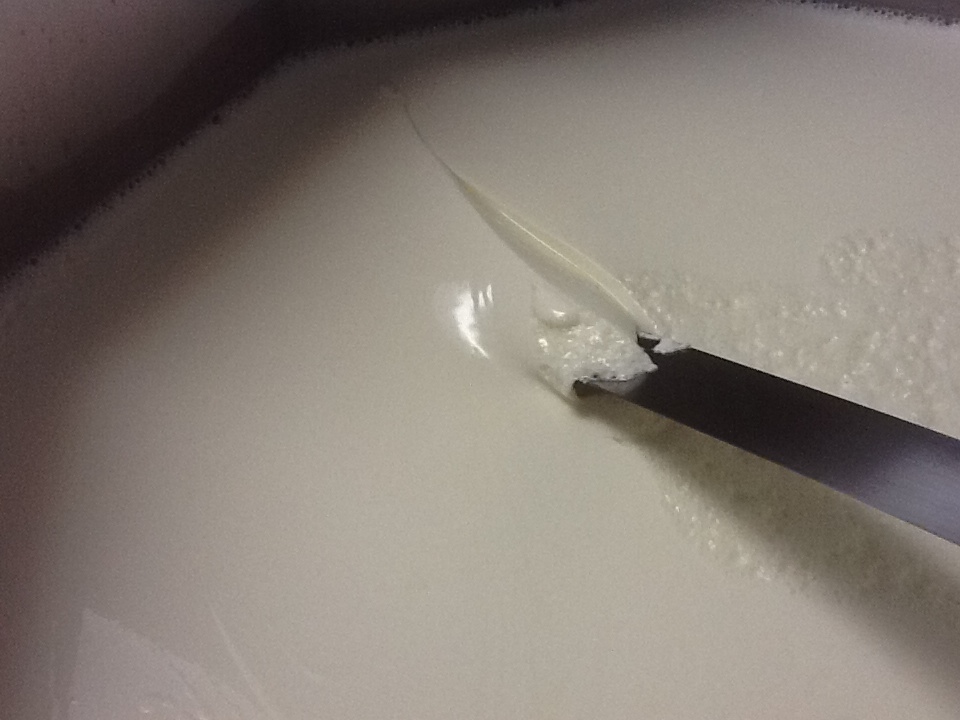
I'm actually writing today from along side my cheese vat. I finished packing our weekly order for Farmer's To You and find myself just hanging out waiting for my milk to flocculate so figured I'd take the opportunity to write. If you are in the Boston area you should check out Farmers To You, a great way to get some real Vermont products straight from the farm!
There are actually other similar services in many areas and it is a great way to find wonderful foods, often from farmers in your local area. Near us we also have the St. Johnsbury Food Alliance which tried their hands at an online market this fall for St.Johnsbury area folks. The Central Vermont Food Hub, focusing on bringing their customers food from producers in Washington County, VT. And recently a friend of the farm became involved in yet another local food/farm to the people type service for folks in the Charlotte/Shelburne area - yourfarmstand.com. As a food producer it's great, and allows us to extend our reach to the consumer with relatively low overhead.
So back to my milk (which by now has flocculated) - working with goat milk today, making Feta. Feta is actually a good cheese for the home cheese maker to start out with. The basic process is simple and there are several tutorials on YouTube even! Actually, what isn't there a tutorial for on YouTube? Our Feta is made from our own recipe but as the process really isn't that different across the board, we think our secret really has more to do with our milk. Time to cut the curd!

There are actually other similar services in many areas and it is a great way to find wonderful foods, often from farmers in your local area. Near us we also have the St. Johnsbury Food Alliance which tried their hands at an online market this fall for St.Johnsbury area folks. The Central Vermont Food Hub, focusing on bringing their customers food from producers in Washington County, VT. And recently a friend of the farm became involved in yet another local food/farm to the people type service for folks in the Charlotte/Shelburne area - yourfarmstand.com. As a food producer it's great, and allows us to extend our reach to the consumer with relatively low overhead.
So back to my milk (which by now has flocculated) - working with goat milk today, making Feta. Feta is actually a good cheese for the home cheese maker to start out with. The basic process is simple and there are several tutorials on YouTube even! Actually, what isn't there a tutorial for on YouTube? Our Feta is made from our own recipe but as the process really isn't that different across the board, we think our secret really has more to do with our milk. Time to cut the curd!
Monday, November 28, 2011
Tis The Season
Wreath - check. Lights - check. Bows -check. We are officially decorated for the holidays! Next up, stocking the farm store. Post flood we've managed to make preserves, harvest honey, make some lucious goat milk soaps, make some cool goat notecards, and of course work on increasing the variety of cheeses well be offering. I'll also be making truffles and goat milk fudge later this week to bring to market this weekend and also feature in the farm store. Of course we will also have special dog cookies made from chèvre as well!
Yesterday we took samples of two of our developing cheeses. The first is a Spanish style cheese from pasteurized goat milk. We opted to go with a pasteurized milk vs raw milk as our goal is to sell the cheese when it is young. Although I have to say that I recently tried a piece of the same type of cheese from Spain that was a bit older and YUUUUMMMM! Our version is looking lovely. With its earthy blue-grey rind it resembles the surface of a rock, but once I pulled a plug from the center of the cheese a beautiful, creamy white center was revealed which melted in my mouth, full of flavor. I can't wait to see what it is like in another couple weeks.

The second cheese represents our first attempt at a goat milk blue cheese. Blues are tough, but in my opinion, when they are good they are among the best. When they aren't good thought they can be horrible, really horrible. I've been told that its just not possible to make a good blue cheese with goat milk. But after tasting a Italian Goat Gorgonzola, I respectfully disagree. So, a few months and a fair amount of research later I've come up with a modified recipe for a blue that I hope will lead us somewhere. Also on the table for future development is a goat/cow blue, in the style of a Spanish Valdeon (a traditional aged Spanish cheese, wrapped in sycamore maple or chestnut leaves), but wrapping our version in a more Vermont leaf: sugar maple. This will be a project farther down the road as it isn't exactly the right season for fresh maple sugar leaves, and I'd like to gain a little more hands on experience with making blues first.
While our all goat blue is months away from being available, if all goes well our newest Spanish style aged cheese will be available before Christmas.
Yesterday we took samples of two of our developing cheeses. The first is a Spanish style cheese from pasteurized goat milk. We opted to go with a pasteurized milk vs raw milk as our goal is to sell the cheese when it is young. Although I have to say that I recently tried a piece of the same type of cheese from Spain that was a bit older and YUUUUMMMM! Our version is looking lovely. With its earthy blue-grey rind it resembles the surface of a rock, but once I pulled a plug from the center of the cheese a beautiful, creamy white center was revealed which melted in my mouth, full of flavor. I can't wait to see what it is like in another couple weeks.

The second cheese represents our first attempt at a goat milk blue cheese. Blues are tough, but in my opinion, when they are good they are among the best. When they aren't good thought they can be horrible, really horrible. I've been told that its just not possible to make a good blue cheese with goat milk. But after tasting a Italian Goat Gorgonzola, I respectfully disagree. So, a few months and a fair amount of research later I've come up with a modified recipe for a blue that I hope will lead us somewhere. Also on the table for future development is a goat/cow blue, in the style of a Spanish Valdeon (a traditional aged Spanish cheese, wrapped in sycamore maple or chestnut leaves), but wrapping our version in a more Vermont leaf: sugar maple. This will be a project farther down the road as it isn't exactly the right season for fresh maple sugar leaves, and I'd like to gain a little more hands on experience with making blues first.
While our all goat blue is months away from being available, if all goes well our newest Spanish style aged cheese will be available before Christmas.
Saturday, November 26, 2011
Here we go
We don't have many market commitments this time of year so, since our milk production is still fairly decent, this is a big research and development time of year in the cheese make room. This week in particular has been ridiculously busy.
Monday I started 3 lactic cheeses which, if all goes as planned will be ready for sale right before Christmas.
Tuesday I started a special aged cheese. It's actually a little R&D we are working on so this particular cheese is a cross between that and something special for some friends.
Wednesday I made mozzarella, again part of the R&D project.
Thursday I set some Cream Cheese, more R&D.
Friday I set our weekly batch of chèvre, which I'm about to go out and set to drain. That is a record total for us as far as varieties of cheese made in a week, 7 in total this week. Phew!
Monday I started 3 lactic cheeses which, if all goes as planned will be ready for sale right before Christmas.
Tuesday I started a special aged cheese. It's actually a little R&D we are working on so this particular cheese is a cross between that and something special for some friends.
Wednesday I made mozzarella, again part of the R&D project.
Thursday I set some Cream Cheese, more R&D.
Friday I set our weekly batch of chèvre, which I'm about to go out and set to drain. That is a record total for us as far as varieties of cheese made in a week, 7 in total this week. Phew!
Subscribe to:
Posts (Atom)